

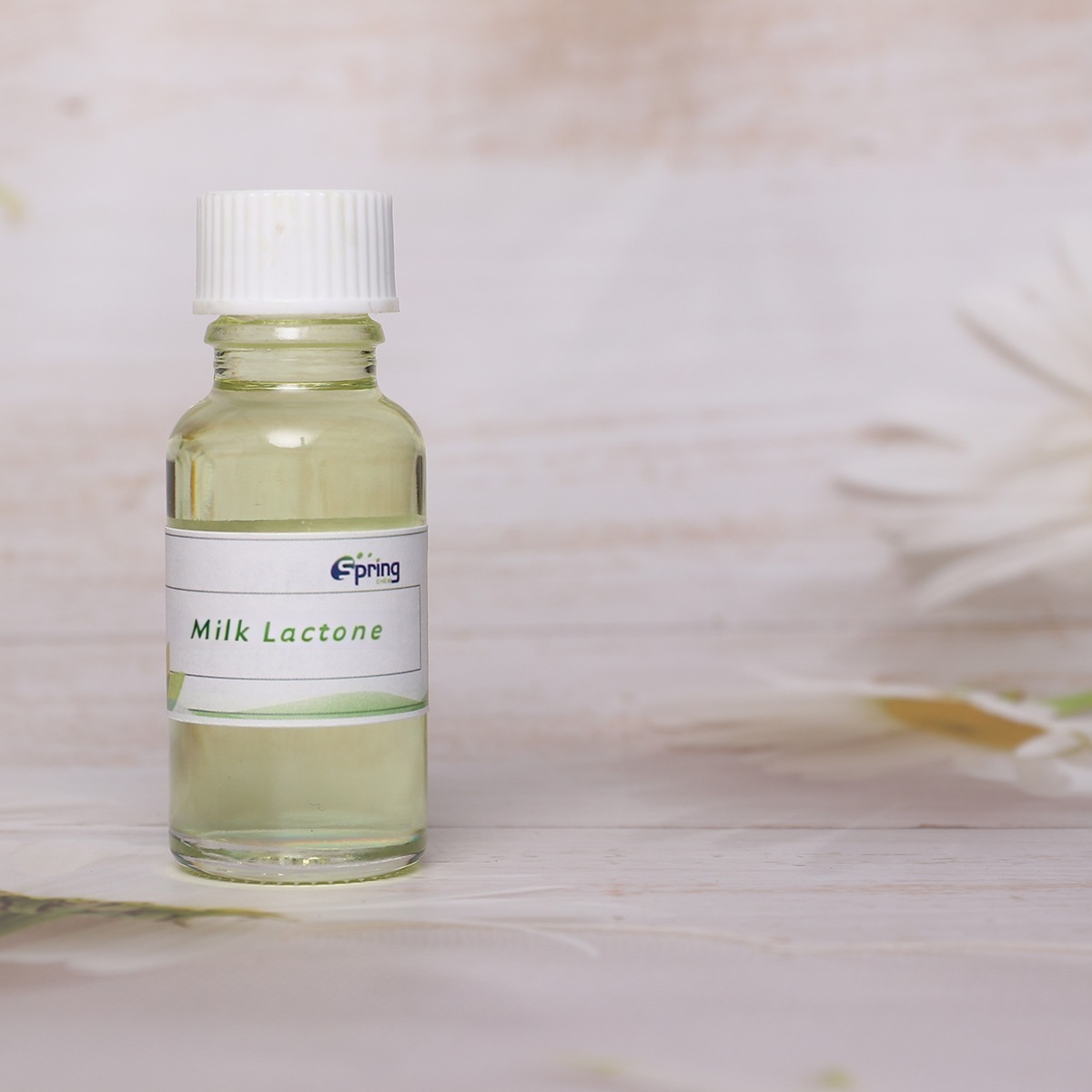
Milk Lactone, CAS 72881-27-7, FEMA 3742, is an important specialty aroma material widely applied in the global flavor and fragrance industry. Its formal chemical identity is a mixture of 5-decenoic acid and 6-decenoic acid. Interestingly, despite the name “lactone”, it is technically an unsaturated carboxylic acid rather than a cyclic ester lactone, which often surprises new perfumers and flavorists.
It delivers a rich, natural milky and creamy core note, balanced with subtle green, fruity and peach-skin undertones. Upon drydown, soft rose-like and lightly waxy facets emerge, distinguishing it from conventional dairy lactones such as delta-decalactone. Its aroma is not simply sweet milk; it carries a fresh, clean, lifelike dairy character that avoids heavy, greasy or cheesy off-notes when dosed properly.
Flavor Sector
In the flavor sector, Milk Lactone is the star ingredient for building authentic dairy flavour bases. It is commonly formulated into milk, fresh cream, butter, yogurt and cheese flavours. Food technologists add it to baked goods, ice cream, desserts, confectionery and dairy drinks to boost creaminess, round out mouthfeel and strengthen the persistence of dairy notes. The typical dosage range in flavour concentrates falls between 0.5% and 20%, depending on the target profile and finished food matrix. It is well accepted under food flavour regulations and widely used in both natural-identical and synthetic flavour systems.
Perfumery
For perfumery, Milk Lactone opens new creative possibilities. It brings a soft milky, watery freshness to floral accords, especially rose, jasmine and gardenia compositions. It can soften sharp green top notes, add a gentle gourmand warmth to fine fragrances, body care scents, candles and home fragrances. Unlike many creamy lactones that lean heavily towards coconut or peach, Milk Lactone acts as a bridge between green-fruity and milky-gourmand themes, giving perfumers a tool to craft clean, comforting, modern milk scents without cloying sweetness.
Industrial Production & Application
Industrial production of Milk Lactone is mainly chemical synthesis. The finished product is usually a pale oily liquid with good stability under normal flavour and fragrance processing conditions.
It blends harmoniously with most common aroma chemicals: other lactones, fatty aldehydes, terpenes, floral absolutes and vanilla derivatives. Its odour strength is high, so it is always applied at low concentrations in final formulas; over-dosing will bring undesirable fatty and sour nuances.
As consumer demand for authentic, clean dairy taste and soft gourmand fragrance keeps rising, Milk Lactone has grown into an indispensable staple in flavour houses and fragrance studios worldwide. Its unique sensory profile fills a gap that traditional lactones cannot cover. For flavourists, it is the secret to making cream flavours taste less artificial. For perfumers, it is a subtle, elegant milky building block that supports countless creative scent concepts.
Summary
In summary, Milk Lactone stands out as a remarkable specialty aroma chemical. Its special combination of creamy milkiness, green freshness and delicate fruity-floral undertones makes it highly flexible across food and fragrance markets. It will remain a key raw material for developers pursuing natural, balanced and appealing dairy and gourmand profiles.
Post time: Nov-10-2026